

SIGHTSEEING
Local Attractions
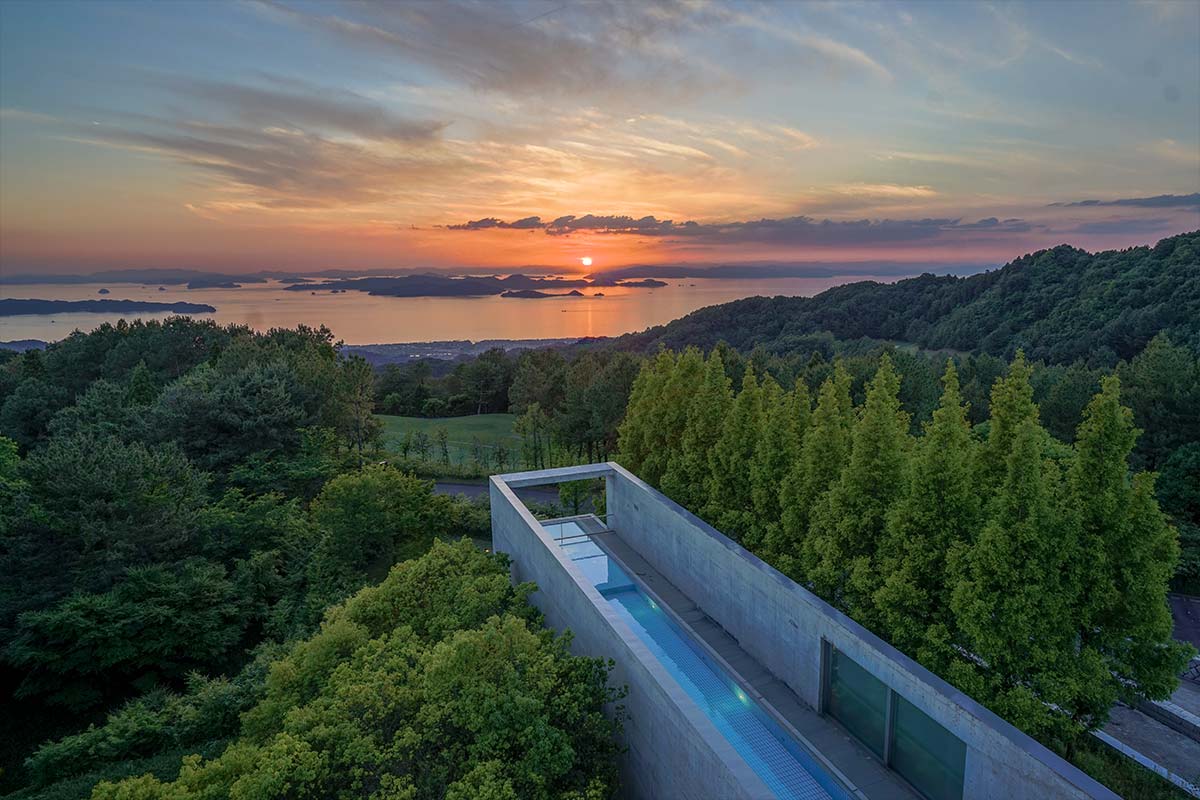
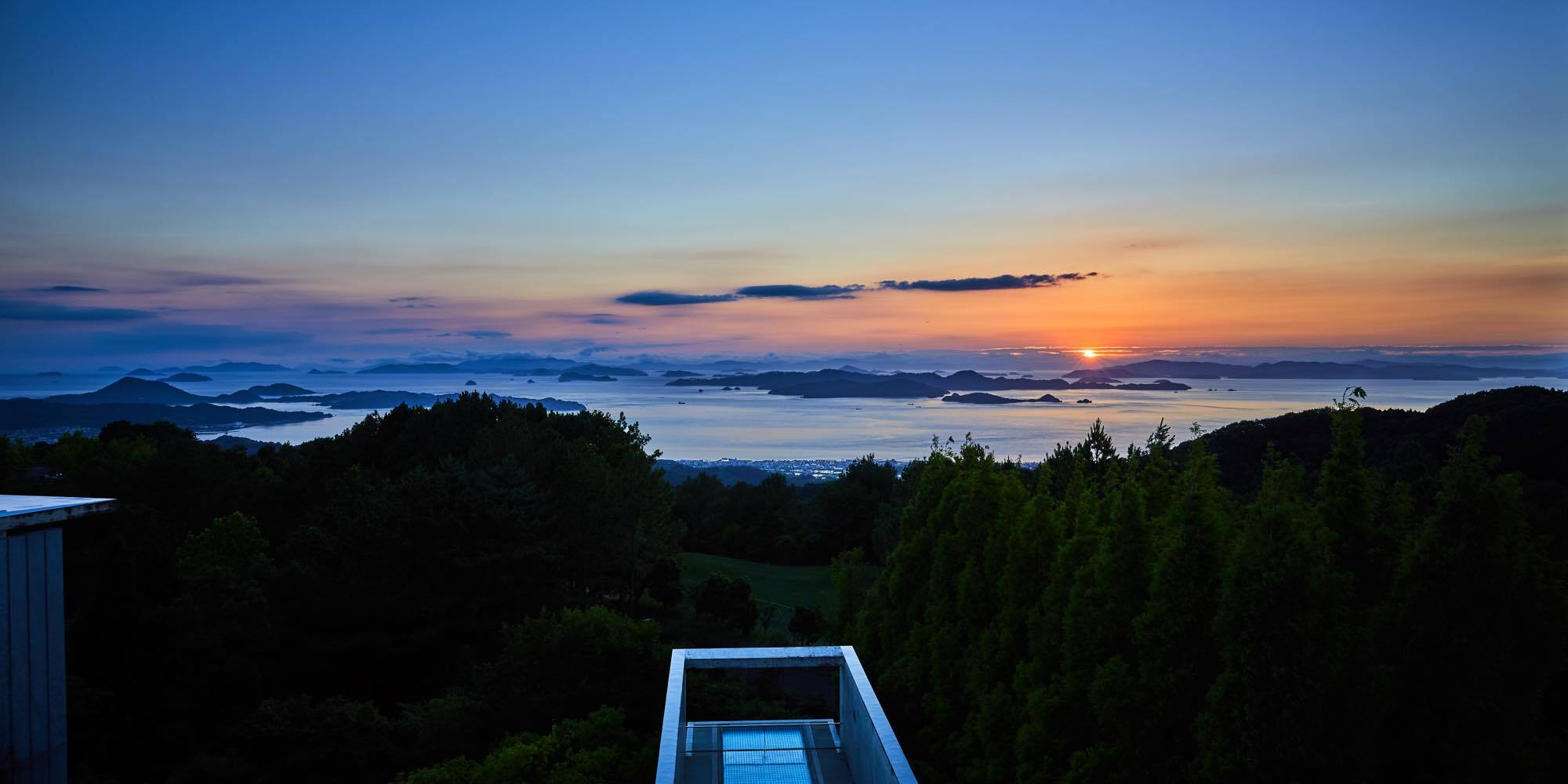
A tranquil sea and majestic nature. Time flows slowly here. Around SETOUCHI RETREAT AONAGI, located within Japan’s largest Setouchi National Park, various delights await you. From Dogo Onsen, Japan’s oldest hot spring, to the Shimanami Kaido expressway connecting Hiroshima and Onomichi. Please use our location as your base for sightseeing.
No.01
IMABARI/ SHIMANAMI BRIDGE
Imabari/Shimanami Kaido area
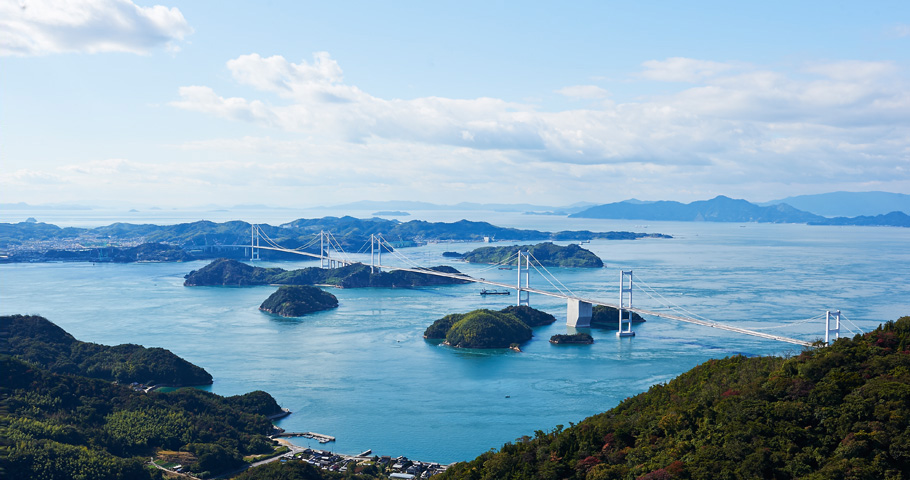
Shimanami Sea Route
Opened in April 2006, the Kurushima Kaikyo Bridge is the world’s first triple suspension bridge. From the observatory atop Mt. Kirosan (307.8 m) on Oshima, you can take in sunsets sinking into the sea and the illuminated bridge at night—enjoying the scenery at any time of day. Beyond the views, its intricate design, created by architect Kengo Kuma, has also earned high acclaim in the architectural world.
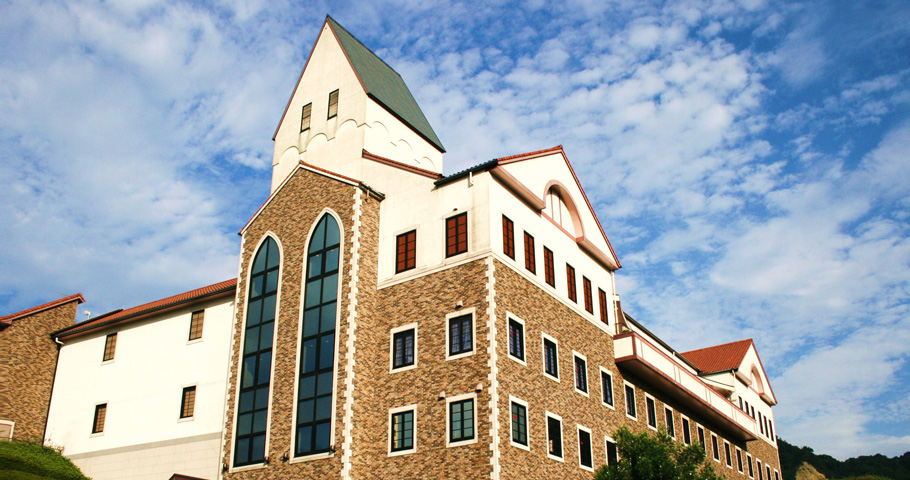
Towel Museum ICHIHIRO
◎ A world-rare museum merging towels and art
Imabari City is Japan’s leading towel production center. The Towel Museum, a rarity worldwide, features European-style gardens and facilities such as a towel museum supervised by picture book authors and towel collection shops. You can also enjoy a relaxing tea time captivated by the soft, comfortable towels. The museum offers an overwhelming variety of souvenirs, including original products unique to Japan’s top towel region and Shikoku specialties.
◎ Charming gardens as well as towels
While there is a “Towel Manufacturing Demonstration Corner” where you can watch towels being woven into fabric, that is not the only charm of the Towel Museum. It is also delightful to take a leisurely stroll through the approximately 33,000-square-meter European Garden, which shows different seasonal expressions throughout the year.
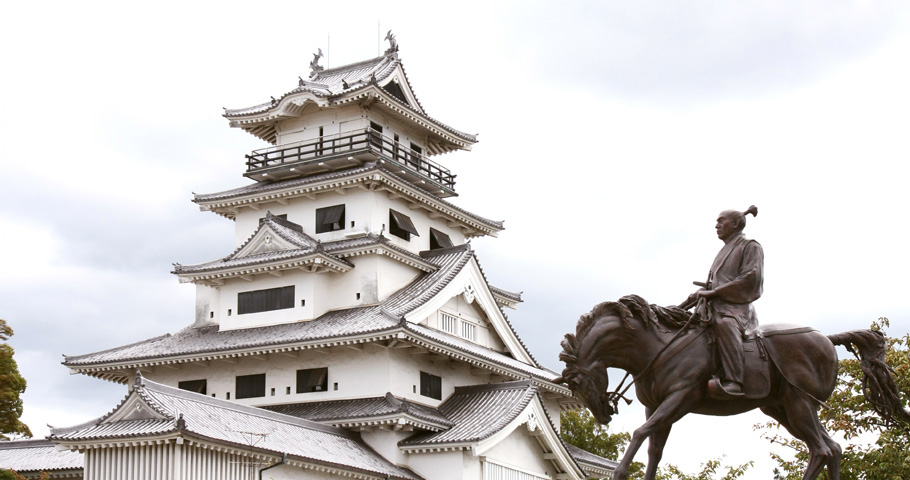
Imabari Castle (Japan)
◎ An impregnable fortress, the masterpiece of a master castle builder
This coastal “sea castle” features a unique structure with a five-story, six-level keep and a moat that draws in seawater. It is recognized as one of Japan’s Three Great Sea Castles and one of the 100 Fine Castles of Japan. The castle-building techniques of the renowned master Takatora Todo can be seen throughout. Currently, the castle is illuminated with a design by lighting designer Haruki Kaito, allowing visitors to see a mystical and beautiful side of the castle that differs from its daytime appearance, every day from 30 minutes after sunset until 11:00 PM.
No.02
CENTRAL TOWN
City Center
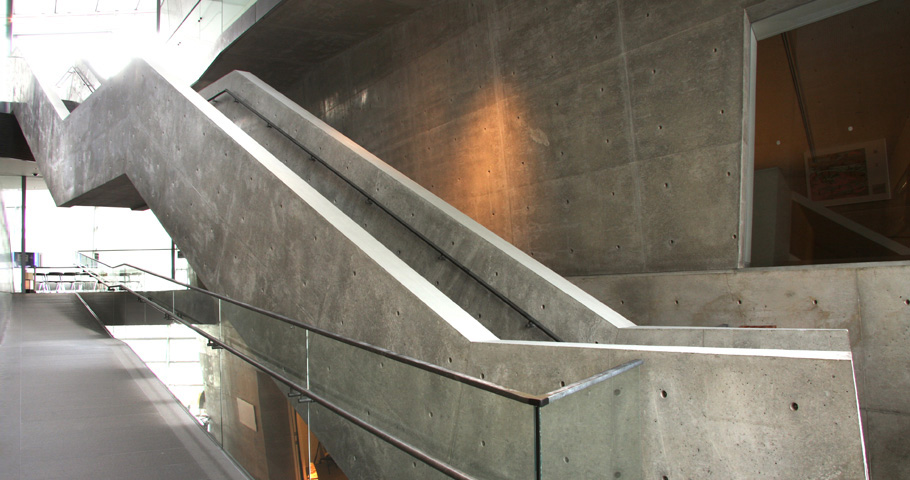
Saka no Ue no Kumo Museum
◎ Retracing the footsteps of Masaoka Shiki and the Akiyama brothers, Yoshifuru and Saneyuki.
Ryotaro Shiba’s novel “Saka no Ue no Kumo” (Clouds Above the Hill) depicts the growth of Meiji-era Japan through the lives of three Matsuyama natives: Masaoka Shiki and the brothers Yoshifuru and Saneyuki Akiyama.
◎ Architecture designed by Tadao Ando is also a must-see.
Located in the greenery at the foot of Matsuyama Castle, this museum opened on April 28, 2007, and was designed by Tadao Ando. While enjoying Ando’s architecture, visitors can wander through exhibition rooms connected by triangular slopes, feeling the flow of time and history while retracing the footsteps of these three figures.
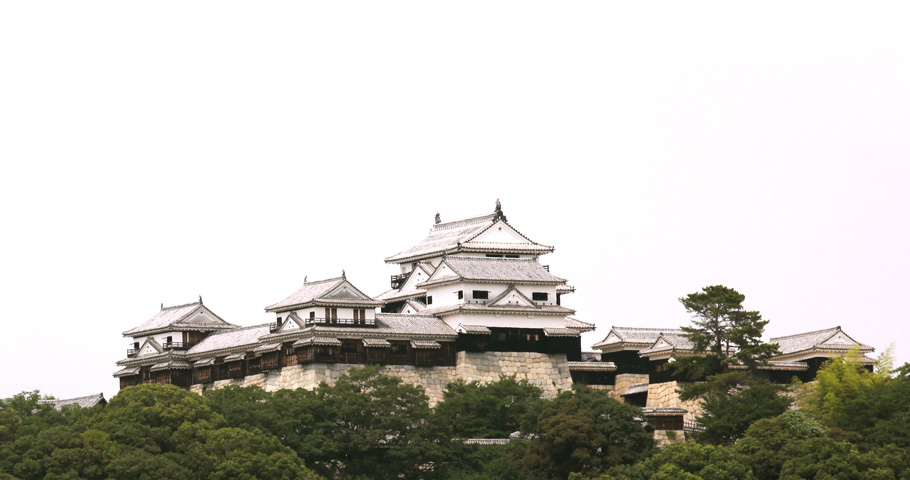
Matsuyama Castle
◎ One of only 12 castles in Japan with an original keep from the Edo period
This is one of the 12 castles nationwide where the castle keep built in the Edo period still exists, and it is selected as one of Japan’s 100 Fine Castles. Standing on a hill, the keep offers a panoramic view of the city and the Seto Inland Sea. Construction was initiated by Yoshiaki Kato. At the Matsuyama Castle Ninomaru Historical Garden, performances such as Takigino (open-air Noh), which was loved by the feudal lords, are held, and the gardens bustle with seasonal beauty.
◎ Reach the summit via ropeway or chairlift
Standing on a hill, the keep provides a sweeping view of the city and the Seto Inland Sea. It is a 5-minute walk from the Iyo Railway “Okaido” tram stop, followed by a 3-minute ropeway ride or a 6-minute chairlift ride. You can also experience the charm of Matsuyama’s sightseeing spots on the retro Botchan Train, a restoration of the Meiji-era steam locomotives that once ran through the city.
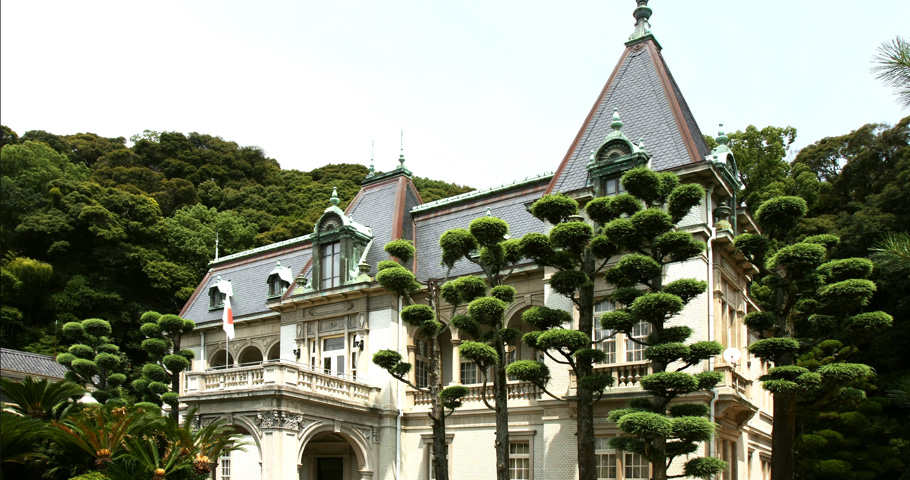
Bansuiso (name of a restaurant)
◎ A pride of Japan: A pure French-style villa conveying Taisho Romanism
Nestled in the lush forest at the foot of Matsuyama Castle, “Bansuiso” is a French Renaissance-style villa built in 1922 as a second home for Count Sadakoto Hisamatsu, a descendant of the Matsuyama lords. It is the oldest reinforced concrete structure in Ehime Prefecture and a National Important Cultural Property. Visitors can experience the glamorous Taisho Roman style that remains today. The construction cost was said to be approximately 300,000 yen. Considering the Prefectural Government Main Building was built in 1929 for about 1 million yen, the fact that this much smaller annex cost 300,000 yen seven or eight years earlier illustrates the immense scale of the investment.
◎ Renowned as a social hub for political and business leaders, as well as the Imperial Family
Reflecting the tastes of Count Sadakoto, who lived in France for a long time as a military attaché, this pure French-style building served as a premier social venue where luminaries from various fields gathered. It was a mandatory stop for members of the Imperial Family whenever they visited the prefecture. It is also said that the completion was rushed to coincide with the visit of Prince Hirohito (later Emperor Showa) to Matsuyama.
No.03
CENTRAL TOWN DOGO AREA
Dogo area in the city
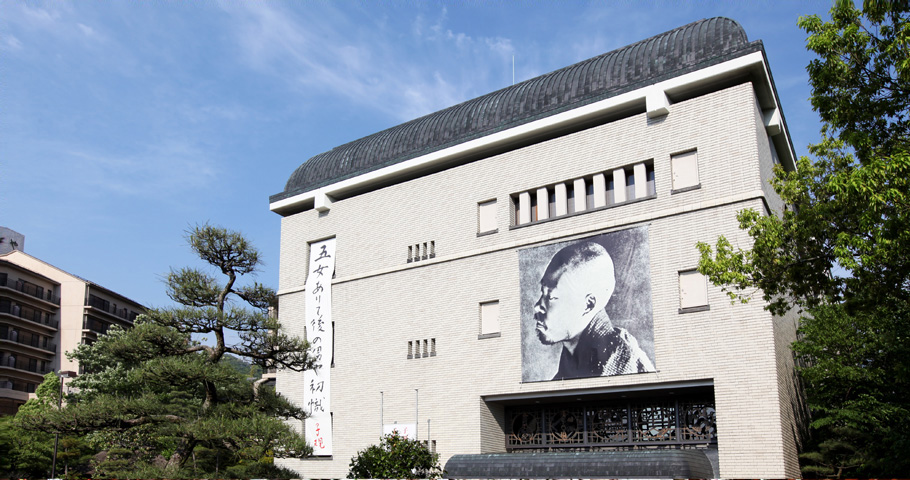
Matsuyama Shiki Memorial Museum
◎ Exploring the life of Shiki, who laid the foundation for modern Haiku
Despite having to give up his dreams many times due to a serious chronic illness, Masaoka Shiki, a haiku poet from Matsuyama, found new purpose each time and raced through the new Meiji era. He is famous for the haiku: “I bite into a persimmon / and the bell tolls / at Horyu-ji.” Through approximately 60,000 items, including original materials, replicas, and panels, as well as a video corner, the museum introduces Shiki’s life path and the history and literature of Matsuyama in an easy-to-understand manner for everyone.
◎ Reflecting on Gudabutsu-an, where Soseki Natsume and Masaoka Shiki stayed together
Inside the museum, the first floor of the now-lost Gudabutsu-an has been reconstructed; this is where Soseki Natsume and Masaoka Shiki spent 52 days together in 1895. The name “Gudabutsu-an” is derived from Soseki Natsume’s haiku pen name, “Gudabutsu.” The novel “Botchan” was born from his experiences as a teacher in Matsuyama during his time here.
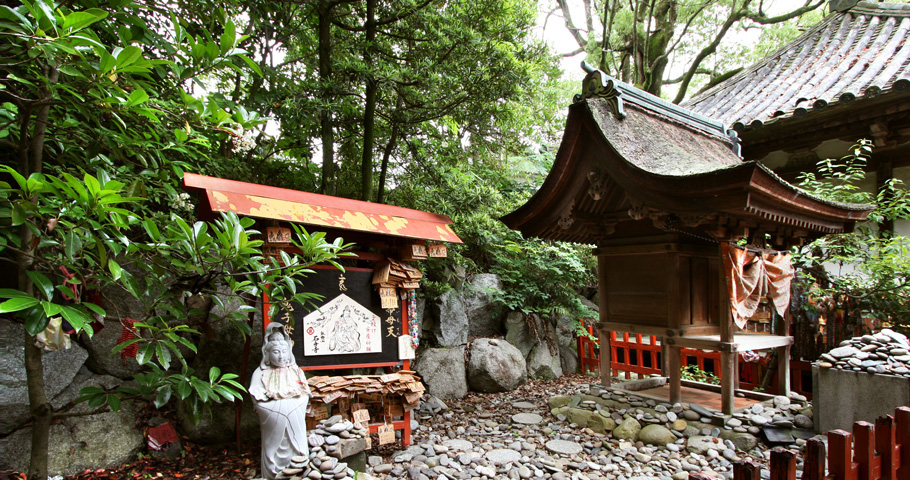
stone temple
◎ One of the 88 temples of the Shikoku Pilgrimage, housing many National Treasures and Important Cultural Properties
The 51st temple of the Shikoku 88-temple pilgrimage, Ishite-ji features a corridor-style approach and is a sacred site bustling with pilgrims and tourists. The legend of the temple’s name comes from Emon Saburo, the original pilgrim, who received a stone from Kobo Daishi just before passing away; later, a child born to a local powerful family was found clutching that stone in his right hand. The famous “Oyaki” at the No. 51 canteen is said to have been served in the past to welcome pilgrims.
◎ A temple of cultural assets, arguably the finest among Shikoku’s sacred sites
The Ni-o statues in the tower gate are works of the Unkei school, and the main image of Yakushi Nyorai is by Gyoki. The sight of almost all the halls and towers designated as National Treasures or National Important Cultural Properties is spectacular. With a treasure house displaying temple artifacts at all times, it is arguably the leading temple for cultural assets in the Shikoku pilgrimage. The Niomon gate is a National Treasure, standing 7m high with a 4m wide entrance, built in 1318 in a two-story irimoya-style with tile roofing. Important Cultural Properties include the main hall, the three-story pagoda, the bell tower, the five-ring pagoda, the Hariti-mo-ten Hall, the Goma Hall, and Ehime’s oldest bronze bell inscribed with the year 1251.
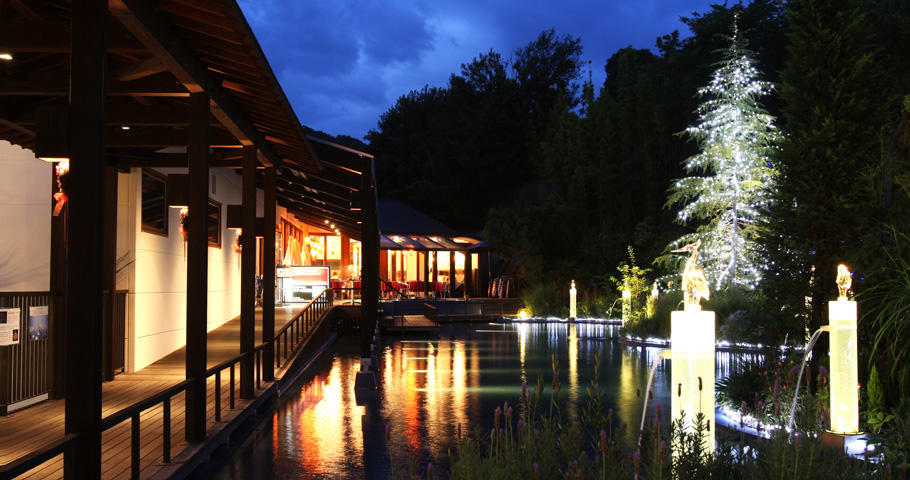
Dogo Giyaman Glass Art Museum
◎ Precious glass crafts made from the Edo to Taisho periods
The museum exhibits approximately 300 items, including the red glass panels from the Shinrokaku—the symbol of the Dogo Onsen Main Building—as well as rare Edo-period Giyaman and Biidoro glass, and precious glass crafts from the Meiji and Taisho eras. Inside, visitors can enjoy delicate and elegant glass crafts introduced from the West and refined by traditional Japanese techniques. Approximately 300 pieces are on display, including rare Edo-period glass and valuable works from the Meiji and Taisho periods.
◎ Night illumination and the attached cafe-dining are recommended
The garden is decorated with glass and water installations, such as egret sculptures and a wine bottle waterfall, and the night illumination leads Dogo further into a dreamlike world. The view from the attached cafe-dining can be enjoyed day or night.
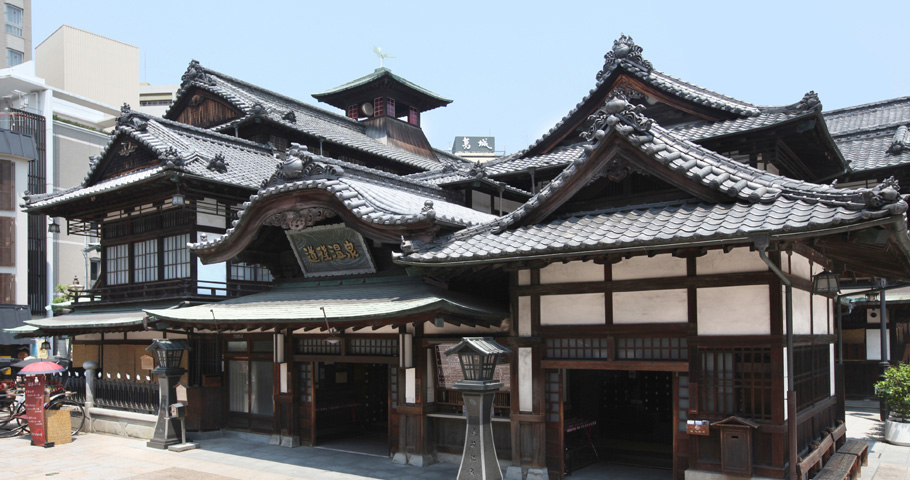
Dogo Onsen Honkan
◎ The first hot spring facility in Japan designated as a National Important Cultural Property
Boasting the oldest history in Japan, the three-story wooden main building was built in 1894 and became the first hot spring facility in Japan to be designated a National Important Cultural Property in 1994. You can feel the history knowing that figures from Prince Shotoku to successive members of the Imperial Family, Emperor Showa, and Soseki Natsume have bathed here. The “Toki-no-Taiko” drum beaten at the Shinrokaku drum tower echoes three times a day and is selected as one of the “100 Soundscapes of Japan.” Dogo Onsen Honkan features a smooth, colorless, and transparent free-flowing alkaline simple spring that has skin-beautifying effects, earning it the No. 1 ranking for solo female travelers. At the “Botchan Karakuri Clock,” the symbol of Dogo Onsen, the clock rises every hour to reveal characters from Soseki Natsume’s novel “Botchan.”
◎ Highlights include the drum announcing the first bath of the morning and the night illumination of Shinrokaku
Year-round, bathing is available from 6:00 AM to the sound of the drum, a local tradition enjoyed by many tourists as well. The “Toki-no-Taiko” drum echoing from the Shinrokaku announces the start of the first bath. The powerful “don-don” sound resonates in the morning, at noon, and in the evening. At night, the illuminated roof of the Dogo Onsen Honkan features the eye-catching red Giyaman glass of the Shinrokaku. After your bath, we recommend a stroll through “Haikara-dori” to soak in the hot spring atmosphere, or trying the “Botchan Dango,” the signature product of the long-established “Tsuboya Confectionery,” which served as the model for the dango shop in the novel. It is also well-known as one of the models for the bathhouse in the Ghibli masterpiece “Spirited Away.”
No.05
SAIJO / NIIHAMA
Saijo and Niihama area
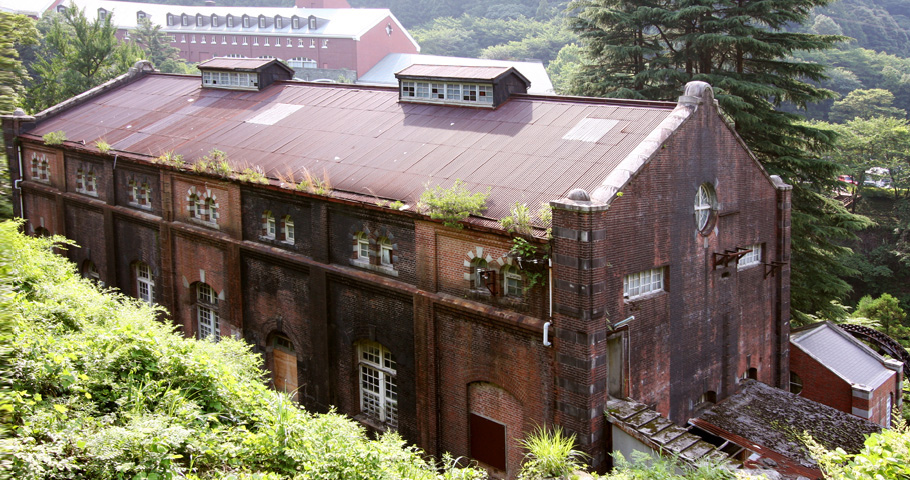
Myntopia Besshi “Edge Contestant Zone
◎ A theme park utilizing the industrial heritage of the Besshi Copper Mine
This theme park utilizes the industrial heritage of the Besshi Copper Mine, which flourished for a long time as one of Japan’s three major copper mines. In addition to touring heritage sites like the 333m-long sightseeing tunnel, visitors of all ages can enjoy a full day of activities, including gold panning, a mine tour to learn about the mine’s history, a sightseeing train that runs through original tunnels and over iron bridges at 10km/h, and a hot spring to refresh after a day of play.
◎ The innermost “Tonaru Zone,” known as the Machu Picchu of the East
The industrial heritage of the Besshi Copper Mine remains deep in the mountains of Niihama. At its peak, it was a bustling town where many people lived, but with the closure of the mine, only its ruins remain. The “Tonaru Zone” of Minetopia Besshi, though not easily accessible, has attracted many tourists in recent years. Its stone walls and brick buildings, combined with its high-altitude location, have earned it the nickname “Machu Picchu of the East.” At an altitude of around 750m, it is also a scenic spot offering views of Niihama city and the distant Seto Inland Sea on clear days.
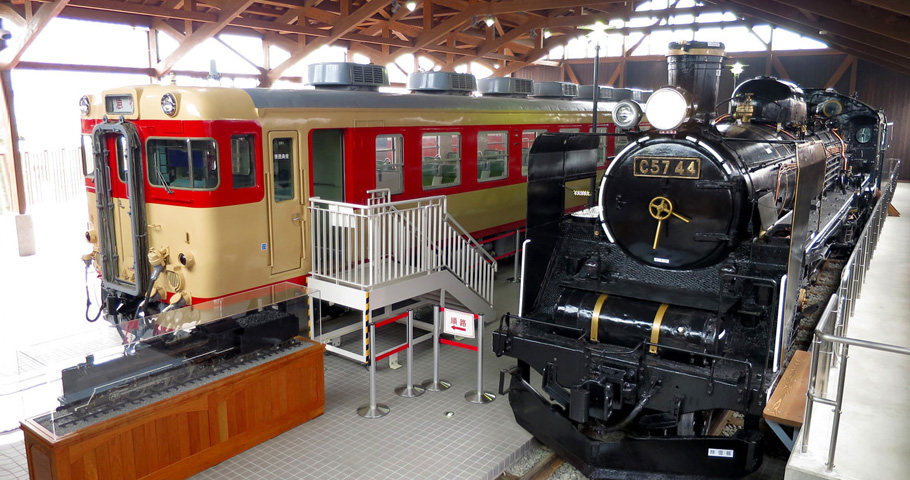
Railroad History Park in SAIJO
◎ Exhibits of the Series 0 Shinkansen and steam locomotives at the Shikoku Railway Cultural Center
This is Shikoku’s first full-scale railway museum, established in the birthplace of Shinji Sogo, known as the “Father of the Shinkansen.” A total of six vehicles are on display, including the original Series 0 Shinkansen, a DF50 diesel locomotive, a C57 steam locomotive, a Kiha 65 express railcar, a DE10 diesel locomotive, and the second-generation Gauge Change Train test vehicle. Visitors can even enter the driver’s cabs or passenger cabins of some vehicles. Additionally, there is a railway diorama where you can experience operating a train, as well as exhibits of actual railway signs and signals, making it enjoyable for both adults and children.
◎ The Shinji Sogo Memorial Museum: The man who realized the dream super-express Tokaido Shinkansen as President of JNR
Shinji Sogo is a local hero who served as the 4th President of the Japanese National Railways (JNR) and realized the dream super-express Tokaido Shinkansen, earning him the title “Father of the Shinkansen.” He also served as the mayor of the former Saijo City. The museum exhibits his handwritten postcards, calligraphy, and personal items he used throughout his life, allowing visitors to learn about his achievements and character. Pamphlets and badges available only here are perfect for travel memories or souvenirs. Visiting alongside the adjacent Shikoku Railway Cultural Center allows for an even deeper study of railways.
Besshi Copper Mine Memorial Hall
◎ A monument to the development of Sumitomo built in its home region
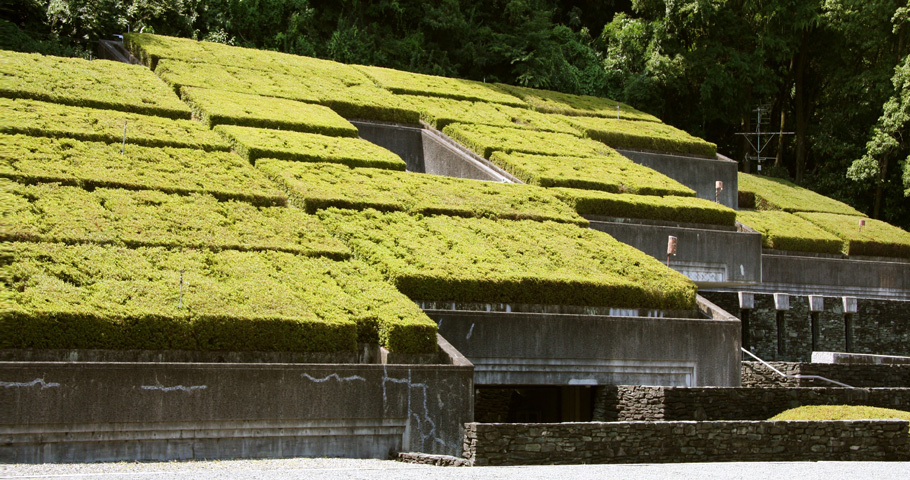
Established jointly by the Sumitomo Group to pass down the achievements of the Besshi Copper Mine—one of Japan’s three major copper mines—to future generations. The museum features a semi-underground design that utilizes the mountain slope. It consists of sections introducing the history of the Sumitomo Group and the Besshi Copper Mine, as well as the technology and the lives of the workers, allowing visitors to learn about the conditions of that time. The “Besshi No. 1 Locomotive,” which ran on the first mining railway to open in Japan, is on display. Visiting the nearby “Minetopia Besshi” facility will further deepen your understanding.
◎ The “Sunlight of Joy” shines through the skylight only at noon on May 9th
The roof of the memorial museum is planted with 10,000 azaleas (Satsuki), named after the month of May when the Besshi Copper Mine was first opened, offering a unique landscape around May. Furthermore, the sight of a single beam of light, called the “Sunlight of Joy,” shining through the skylight only at noon on May 9th is so mystical it leaves visitors speechless. It is a must-see if you happen to visit on May 9th.
No.06
UHCIKO / OTSU
Uchiko and Ozu area
Ikazaki Kite Museum
◎ Kites from around the world gather in a kite town with 400 years of history
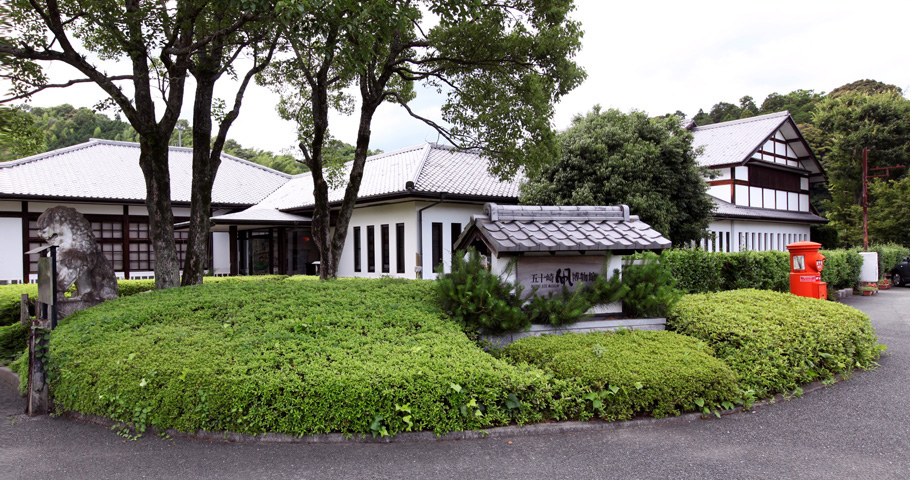
The Ikazaki Great Kite Battle has a history of about 400 years and is designated as an Intangible Folk Cultural Property of Ehime Prefecture. The Kite Museum strives to provide a wide range of materials on kites collected from across Japan and around the world. Traditional kites from various regions and the “success kites” for children celebrating their first festival are among the rare exhibits. This is a unique museum where you can learn about the history and charm of kites.
◎ Kite-making experiences are available with a reservation
You can see the “fighting kites” used in the Ikazaki Great Kite Battle held every May 5th, as well as the unique “Kagari” blades attached to the kite strings, up close—their grandeur is breathtaking! Additionally, kite-making experiences are available by reservation, and the shop sells kite-related goods and Uchiko Town souvenirs.
Uchiko’s Yokaicho Gokoku District
◎ Uchiko-za: Conveying the entertainment of the Taisho era to the present
Uchiko Town flourished from the Edo to Meiji periods through the production of Japanese paper and wax. In this peaceful town where old mansions and atmosphere remain, Uchiko-za is a theater built in 1916 by local merchants. This Kabuki theater has been the center of entertainment, delighting the people of Uchiko for a long time since the Taisho era. On days when no events are held, visitors can tour the interior and backstage. You can stand on the stage or the “hanamachi” runway to feel like a star actor, or sit in the “masu-seki” box seats and imagine the bustle of the past.
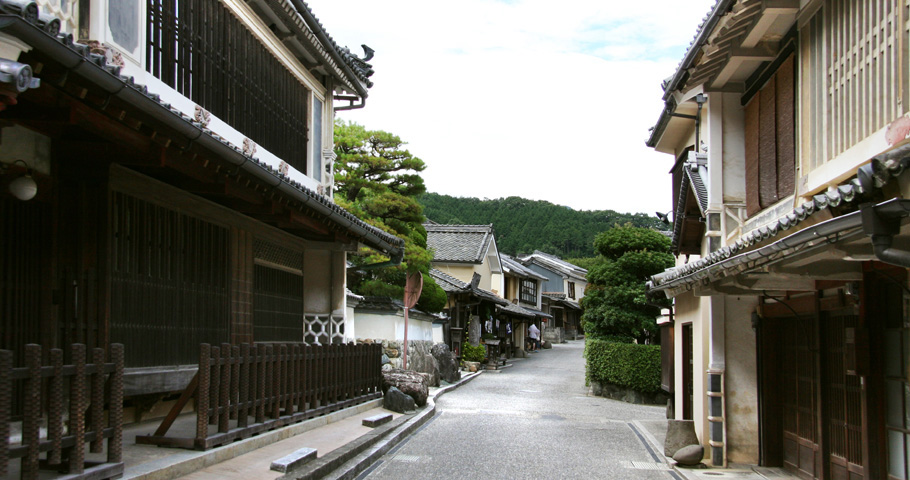
◎ Traditional streetscapes spreading through the Yokaichi Gokoku District
At the traditional Omori Japanese Candle Shop, which has over 200 years of history, you can freely observe the technique of repeatedly applying wood wax to the wick. The streetscape, which includes the Kamihoga Residence (a wax museum) and various souvenir shops, is known as the Yokaichi Gokoku District and is selected as an Important Preservation District for Groups of Traditional Buildings. It is an atmospheric streetscape where merchant houses and private residences built from the Edo to Taisho periods remain for about 600 meters. Japanese paper accessories made with the traditional “Nagashisuki” technique also make excellent souvenirs.